Introduction
Some artists spend their entire lives searching for a distinctive voice. François Allaux found his before he could even properly hold a paintbrush. Born in the vibrant, sun-drenched city of Rabat, Morocco, during a time of profound political and cultural transformation, Allaux’s artistic sensibilities were shaped by the collision of worlds—French colonial influence, North African tradition, and the raw, unfiltered beauty of Mediterranean light. But his story is not merely one of artistic talent. It is a narrative of reinvention, resilience, and the quiet power of visual storytelling.
Allaux is a name that carries weight in the worlds of editorial illustration, fine art, and academic mentorship. He is the kind of artist who doesn’t just create images—he crafts visual arguments. His work has graced the pages of The New York Times, The Washington Post, Le Monde, Time, and Newsweek, making him one of the most sought-after editorial illustrators of his generation. Yet for all his professional acclaim, Allaux remains something of an enigma—a man whose life has been defined as much by his art as by the extraordinary circumstances that have surrounded it.
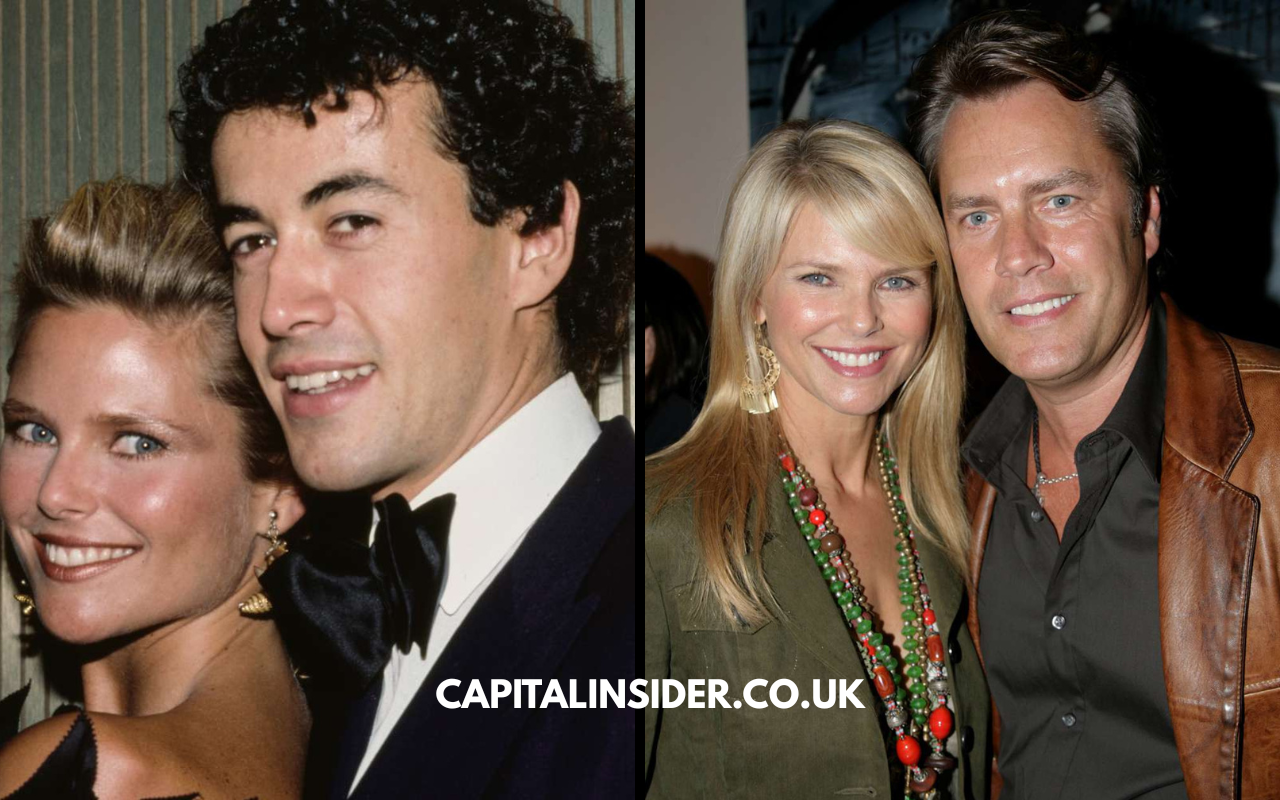
What makes François Allaux truly fascinating is the breadth of his journey. From the potters’ kilns of colonial Morocco to the hallowed halls of the Sorbonne in Paris, from the glittering world of 1970s celebrity—as the first husband of supermodel Christie Brinkley—to the quiet, dedicated life of a professor shaping the next generation of visual thinkers at the University of Massachusetts Dartmouth. His life is a testament to the idea that true artistry is not just about what you create, but about how you live, how you teach, and how you see the world.
Quick Facts
| Category | Details |
|---|---|
| Full Name | Jean-François Allaux |
| Profession | Editorial Illustrator, Fine Artist, Associate Professor Emeritus |
| Born | Rabat, Morocco |
| Age | Born in the 1940s (exact year not publicly documented) |
| Nationality | French |
| Parents | Information not publicly available |
| Siblings | Information not publicly available |
| Education | Ecole Nationale Supérieure des Beaux-Arts, Paris; La Sorbonne, Paris |
| Notable Roles | Founding Member of INX; Associate Professor and Head of Illustration at UMass Dartmouth |
| Notable Clients | The New York Times, The Washington Post, The Wall Street Journal, Le Monde, Time, Newsweek, Encyclopedia Britannica, United Nations Development Program, American Express, Mercedes Benz |
| Ex-Spouse | Christie Brinkley (m. 1975–1981) |
| Current Residence | Providence, Rhode Island |
| Net Worth | Estimated in the range of $1 million–$5 million |
| Social Media | Not publicly active on major platforms |
Early Life and Formative Years
The story of François Allaux begins not in the salons of Paris or the galleries of New York, but in the bustling, sun-scorched streets of Rabat, Morocco. Born into a world that was itself in transition, Allaux grew up during the final years of French colonial rule—a period that would profoundly shape his perspective as an artist and as a human being.
In a rare and deeply personal reflection, Allaux once shared a memory that illuminates the roots of his creative spirit. “As a child in colonial Morocco,” he recalled, “I spent many afternoons with my father visiting the potters whose primitive kilns dotted the landscape on the outskirts of Rabat, bringing home a variety of clays from which I fashioned an ever-expanding menagerie of animals and figures”. This childhood memory is more than just a nostalgic anecdote. It is a window into the soul of an artist who would go on to become one of the most respected illustrators of his time.
Those afternoons among the potters were, in many ways, Allaux’s first art school. He learned to see the beauty in raw materials, to understand the alchemy of transformation, and to appreciate the power of hands-on creation. The clays he shaped into animals and figures were his first canvases, his first statements of intent. Even at the age of twelve, there was an unmistakable drive to create, to mold the world around him into something meaningful.
But Allaux’s early life was also marked by the turbulence of history. When Morocco gained its independence from France in 1956, the country underwent a seismic shift. For Allaux, who had been born into a French colonial household, this meant navigating a new and uncertain reality. His family made the difficult decision to leave Morocco and relocate to France. It was a journey that would take him from the sun-baked landscapes of North Africa to the intellectual and artistic epicenter of Europe.
Education and Artistic Formation
Arriving in France, Allaux did not simply adapt to his new environment—he immersed himself in it with the same intensity he had once brought to shaping clay figures in Rabat. He enrolled at the Ecole Nationale Supérieure des Beaux-Arts in Paris, one of the most prestigious and rigorous art schools in the world. There, he honed his technical skills, studying the classical traditions of European art while also absorbing the avant-garde movements that were reshaping the artistic landscape.
But Allaux understood that technical proficiency alone was not enough. He also pursued studies at the Sorbonne, the legendary university that has been at the heart of French intellectual life for centuries. At the Sorbonne, he delved into philosophy, literature, and the humanities—subjects that would inform his approach to illustration and give his work its distinctive intellectual depth.
This combination of artistic and academic training was unusual for an illustrator. Most visual artists of his era focused exclusively on technique, but Allaux was different. He saw illustration not as mere decoration or commercial work, but as a form of visual journalism, a way of engaging with the most pressing ideas and issues of the time. His education at the Beaux-Arts gave him the craft; his time at the Sorbonne gave him the vision.
The Paris of the 1960s and early 1970s was a crucible of creativity. It was the era of existentialism, of student protests, of a profound reimagining of what art could be. Allaux was not merely a spectator to these changes; he was an active participant. The intellectual ferment of the period left an indelible mark on his work, infusing his illustrations with a philosophical depth that set him apart from his peers.
Career Beginnings and the Birth of a Visual Voice
Every artist remembers the moment they first felt seen. For François Allaux, that moment came when his work began appearing in some of the world’s most prestigious publications. His illustrations—sharp, incisive, and unflinchingly honest—caught the attention of editors who were hungry for a fresh visual perspective.
Allaux’s early career was defined by his ability to translate complex ideas into compelling images. Whether he was illustrating a political opinion piece for Le Monde or a cultural feature for Time magazine, he brought the same level of intellectual rigor and artistic skill to every assignment. His work was not just visually striking; it was conceptually rich, layered with meaning that rewarded close looking.
But perhaps his most significant professional achievement came in 1980, when Allaux became a founding member of INX. For those unfamiliar with the organization, INX is the premiere editorial illustration service that has, since its founding, provided journals of opinion worldwide with easy access to the best in pointed political art. In an era before the internet made images instantly accessible, INX was a revolutionary concept—a cooperative of the world’s finest illustrators, united by a shared commitment to visual excellence and intellectual integrity.
Being a founding member of INX was not just a professional milestone for Allaux; it was a statement of purpose. It signaled his commitment to the idea that illustration could be a force for change, a tool for political and social commentary. The artists of INX were not merely illustrators; they were visual journalists, cultural critics, and storytellers all rolled into one.
The Celebrity Chapter: Marriage to Christie Brinkley
No account of François Allaux’s life would be complete without acknowledging the chapter that brought him international celebrity—his marriage to supermodel Christie Brinkley. It is a story that has been told many times, often with a focus on Brinkley’s subsequent relationships with Billy Joel and others. But for Allaux, it was a deeply personal chapter that deserves to be understood on its own terms.
Allaux and Brinkley met in Paris in the early 1970s. Brinkley, then a young model finding her footing in the City of Lights, was drawn to Allaux’s artistic sensibility and intellectual depth. He was eight years her senior, a man of the world who had already established himself as a serious artist. For Brinkley, who would later describe the relationship as “one of the good ones,” Allaux represented something authentic and grounded.
They married in 1975, when Brinkley was just 21 years old. The wedding was a quiet affair, far from the media frenzy that would later surround Brinkley’s subsequent marriages. For eight years, from 1973 to 1981, they built a life together. Brinkley later reflected on their time together with warmth, categorizing her first marriage as one of the positive experiences in her romantic history.
The marriage ended in divorce in 1981. By that point, Brinkley’s star had risen considerably, and the pressures of celebrity had begun to take their toll. But unlike many celebrity divorces, this one was marked by mutual respect rather than acrimony. Brinkley has spoken fondly of Allaux over the years, and the two have maintained a cordial relationship.
For Allaux, the marriage was a double-edged sword. On one hand, it brought him a level of public recognition that few illustrators ever achieve. On the other hand, it threatened to overshadow his professional accomplishments. He was, in the eyes of the tabloid press, “Christie Brinkley’s first husband”—a label that risked reducing a lifetime of artistic achievement to a footnote in someone else’s story.
But Allaux never allowed the celebrity association to define him. He continued to produce exceptional work, to teach with dedication, and to build a legacy that stands entirely on its own merits.
Academic Career: Shaping the Next Generation
In 1999, François Allaux embarked on a new chapter of his career when he joined the faculty of the University of Massachusetts Dartmouth as an Assistant Professor. It was a move that would prove to be as significant as any of his professional accomplishments.
At UMass Dartmouth, Allaux brought the same intellectual rigor and artistic passion to teaching that he had always brought to his illustration work. He became the head of the Illustration option in the Department of Art and Design, a role in which he was responsible for shaping the curriculum and mentoring students. His colleagues described him as a beloved professor, and his students—though they sometimes found him demanding—generally recognized the value of his instruction.
Allaux’s teaching philosophy was rooted in the conviction that illustration was not just a commercial skill but a form of visual thinking. He pushed his students to develop not just their technical abilities but their conceptual understanding. Good design, he believed, was good design—whether it appeared in a student portfolio or on the pages of The New York Times.
Student reviews of Allaux are mixed, as is often the case with demanding professors. Some found him intimidating, even harsh. One student recalled that Allaux once told him his goal of becoming a comic artist was “a waste of time and energy”. But others saw a different side of the man. “JF is a great teacher and pushes his students to do their best,” one former student wrote. “He was not only a teacher, he was a mentor and a friend”. Another described him as “an interesting fun person, and a wonderful resource to have as an artist”.
What emerges from these varied accounts is a portrait of a teacher who cared deeply about his craft and his students, even if his methods were not always gentle. Allaux understood that the illustration world is tough, and that art directors are not going to pat young artists on the back. He prepared his students for that reality, sometimes with a bluntness that could be jarring but was ultimately rooted in a genuine desire to see them succeed.
In 2019, after two decades of service, Allaux retired from his position as Associate Professor at UMass Dartmouth. His retirement was marked by tributes from colleagues and former students who recognized the profound impact he had made on the institution and on countless young artists.
Major Achievements and Awards
François Allaux’s career has been distinguished by numerous accolades from some of the most respected organizations in the design and illustration world. He has received awards from the Society of Publication Designers, Communication Arts, and the Art Directors Club—three of the most prestigious honors available to illustrators.
These awards are not mere decorations. They are recognition of a body of work that has consistently pushed the boundaries of what illustration can achieve. Allaux’s illustrations are characterized by their conceptual clarity, their technical precision, and their ability to communicate complex ideas with striking visual economy.
His client list reads like a who’s who of global media: The New York Times, The Washington Post, The Wall Street Journal, Le Monde, Frankfurter Allgemeine Zeitung, Time, and Newsweek. He has also worked for institutional clients including the Encyclopedia Britannica, the United Nations Development Program, American Express, and Mercedes Benz. Each of these assignments brought its own challenges and opportunities, and Allaux approached each one with the same commitment to excellence.
Beyond commercial illustration, Allaux’s fine art has been exhibited in galleries around the world. His work has appeared at Galerie Petron in Pau, France; Matsuda Gallery in Tokyo, Japan; and the Newport Art Museum in Rhode Island. These exhibitions showcased a different side of Allaux’s talent—one that was less constrained by the demands of editorial clients and more free to explore the purely aesthetic dimensions of his craft.
Artistic Style and Influence
What makes François Allaux’s work so distinctive? The answer lies in his ability to combine intellectual depth with visual clarity. His illustrations are never merely decorative; they are arguments, observations, and provocations.
Allaux’s style is characterized by its sharp lines, its bold use of color, and its conceptual sophistication. He has a gift for distilling complex ideas into single, powerful images—a skill that is essential for editorial illustration but rare in its execution. Whether he is illustrating a political controversy, a social trend, or a cultural phenomenon, Allaux brings the same level of thoughtfulness and craft to his work.
His influence extends beyond his own illustrations to the generations of students he has taught. Many of his former students have gone on to successful careers in illustration, graphic design, and fine art, carrying with them the lessons they learned in his classroom. In this sense, Allaux’s legacy is not just the body of work he has created but the creative DNA he has passed on to others.
Personal Life, Beliefs, and Daily Routines
Beyond the professional accomplishments and the celebrity associations, François Allaux is, at his core, a man of quiet discipline and deep conviction. He currently lives in Providence, Rhode Island, a city known for its artistic community and its vibrant cultural scene.
Allaux’s daily life has been shaped by the rhythms of teaching and creating. During his years at UMass Dartmouth, he commuted to campus, taught classes, mentored students, and continued to produce illustration work for clients around the world. It was a demanding schedule, but one that allowed him to balance his two great passions: creating art and nurturing the next generation of artists.
Those who know Allaux describe him as intellectually curious, fiercely independent, and deeply committed to his craft. He is not the type of artist who seeks the spotlight or courts publicity. His work has always spoken for itself, and he has been content to let it do so.
Allaux’s beliefs about art are rooted in a conviction that visual communication matters—that images have the power to inform, persuade, and transform. In an era of information overload, he has remained committed to the idea that a well-crafted illustration can cut through the noise and speak directly to the human heart.
Net Worth and Income Sources
François Allaux’s net worth is estimated to be in the range of $1 million to $5 million. This figure reflects a lifetime of work as a successful editorial illustrator, fine artist, and academic.
His income has come from multiple sources over the years. As an editorial illustrator, he commanded substantial fees for work published in major newspapers and magazines around the world. His clients included some of the most prestigious publications on the planet, and his rates reflected his status as one of the top illustrators in his field.
His academic career also provided a stable income. As an Associate Professor at UMass Dartmouth, Allaux earned a competitive salary that allowed him to live comfortably while continuing to pursue his artistic work. The University of Massachusetts system is known for offering competitive compensation to its faculty, and Allaux’s long tenure at the institution would have provided him with financial security.
Additionally, Allaux has earned income from the sale of his fine art. His work has been exhibited in galleries in France, Japan, and the United States, and he has sold pieces to collectors around the world. While fine art sales are unlikely to have been his primary source of income, they would have contributed to his overall net worth.
It is important to note that Allaux has never been a celebrity in the traditional sense. His wealth, such as it is, has been earned through decades of hard work and professional excellence, not through the kind of fame that often accompanies celebrity marriages.
Social Media and Public Presence
Unlike many artists of his generation, François Allaux has maintained a relatively low profile on social media. He does not appear to have active public accounts on Instagram, Twitter, or other major platforms. This is consistent with his character: Allaux has always been an artist who lets his work speak for itself rather than courting public attention.
His most significant public presence is through his professional accomplishments—the illustrations that have appeared in major publications, the exhibitions of his fine art, and his legacy as a professor at UMass Dartmouth. For those who wish to engage with Allaux’s work, these are the channels through which his influence is most clearly felt.
In an era when many artists feel compelled to maintain a constant social media presence, Allaux’s relative absence from these platforms is almost refreshing. It suggests a commitment to the work itself rather than to the performance of being an artist.
Recent Updates and Future Goals
Since retiring from UMass Dartmouth in 2019, François Allaux has continued to pursue his artistic work. Retirement has not meant an end to creativity; rather, it has provided him with the time and freedom to explore new directions in his art.
Allaux remains based in Providence, Rhode Island, where he continues to create and exhibit his work. While he is less visible in the public eye than he was during his teaching career, his influence continues to be felt through the students he mentored and the body of work he has produced over a lifetime.
Looking to the future, it seems likely that Allaux will continue to create art on his own terms. He has never been an artist who follows trends or seeks to please the market. His work has always been driven by an inner vision, and there is no reason to believe that will change.
For those who have followed his career, there is a sense that Allaux’s story is far from over. The next chapter may be quieter than the ones that came before, but it promises to be no less meaningful.
Conclusion
François Allaux’s life is a testament to the power of artistic vision, intellectual curiosity, and quiet perseverance. From the potters’ kilns of colonial Morocco to the galleries of Paris and New York, from the classrooms of UMass Dartmouth to the pages of the world’s most prestigious publications, his journey has been one of constant growth, reinvention, and creative integrity.
His story reminds us that true artistry is not about fame or fortune—it is about the relentless pursuit of excellence, the courage to see the world differently, and the generosity to share that vision with others. Allaux has never sought the spotlight, yet his influence has been felt by countless readers, students, and fellow artists.
As François Allaux continues to pave the way for future generations, his story stands as a reminder of how resilience and purpose can shape a meaningful legacy. He has shown us that an artist’s life is not defined by a single chapter—whether a celebrity marriage or a prestigious commission—but by the cumulative impact of a lifetime of work, teaching, and creative exploration. In a world that often celebrates the superficial, Allaux’s career is a powerful argument for depth, for substance, and for the enduring value of visual truth.
Read this too: The Quiet Force Behind Florida’s Real Estate Empire: Itzhak Ezratti Wife
Frequently Asked Questions (FAQs)
1. Who is François Allaux?
François Allaux (full name Jean-François Allaux) is a French-born editorial illustrator, fine artist, and retired Associate Professor at the University of Massachusetts Dartmouth. He is known for his work with major publications including The New York Times, The Washington Post, and Le Monde, and as a founding member of the editorial illustration service INX.
2. What is François Allaux famous for?
Allaux is famous for his distinguished career as an editorial illustrator, his role as a founding member of INX, and his two-decade tenure as a professor and head of the Illustration option at UMass Dartmouth. He is also known for being the first husband of supermodel Christie Brinkley, to whom he was married from 1975 to 1981.
3. Where was François Allaux born?
François Allaux was born in Rabat, Morocco. He lived there until Moroccan independence, after which his family moved to France.
4. Where did François Allaux study?
Allaux studied at the Ecole Nationale Supérieure des Beaux-Arts in Paris and at the Sorbonne, also in Paris.
5. Was François Allaux married to Christie Brinkley?
Yes, François Allaux was married to supermodel Christie Brinkley from 1975 to 1981. Brinkley has described the marriage as “one of the good ones”.
6. What is François Allaux’s net worth?
François Allaux’s net worth is estimated to be in the range of $1 million to $5 million, accumulated through his work as an illustrator, fine artist, and university professor.
7. Is François Allaux on social media?
François Allaux does not appear to maintain active public social media accounts on major platforms like Instagram, Twitter, or LinkedIn.
8. What awards has François Allaux won?
Allaux has received awards from the Society of Publication Designers, Communication Arts, and the Art Directors Club.
9. Where does François Allaux live now?
François Allaux currently lives in Providence, Rhode Island.
10. When did François Allaux retire from teaching?
François Allaux retired from his position as Associate Professor at the University of Massachusetts Dartmouth in 2019.
11. What is INX?
INX is the premiere editorial illustration service that has, since 1980, provided journals of opinion worldwide with access to political art. François Allaux was a founding member of this cooperative.
12. What publications has François Allaux worked for?
Allaux’s clients have included The New York Times, The Washington Post, The Wall Street Journal, Le Monde, Frankfurter Allgemeine Zeitung, Time, and Newsweek, among others.
13. What is François Allaux’s artistic style?
Allaux’s work is characterized by its conceptual clarity, sharp lines, bold use of color, and ability to distill complex ideas into powerful visual statements.
14. Did François Allaux have children?
Public records do not indicate that François Allaux had children.
15. What is François Allaux doing now?
Since retiring from UMass Dartmouth in 2019, Allaux has continued to pursue his artistic work from his base in Providence, Rhode Island.