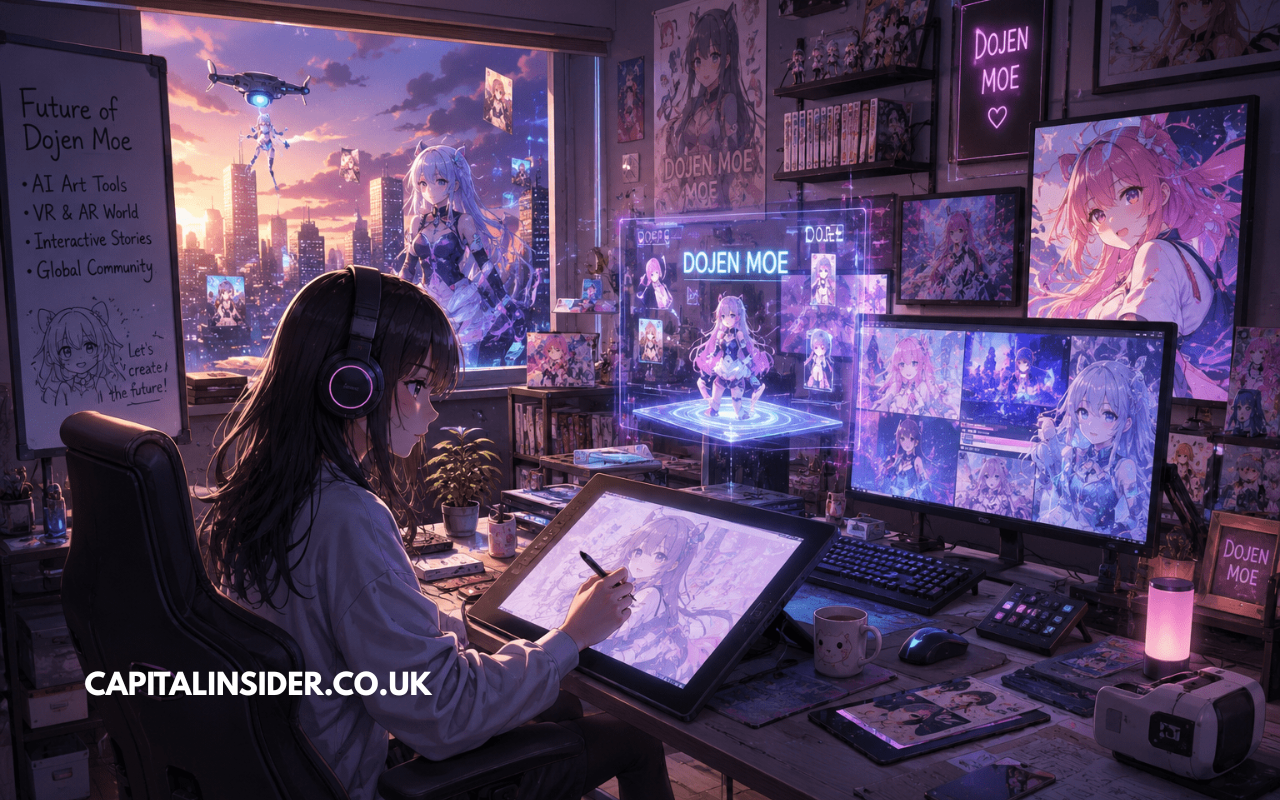
Every once in a while, a cultural wave rises not from a single source, but from a collective feeling—a shared emotional language that spreads without announcement or permission. This is the story of Dojen Moe. It’s a name that doesn’t belong to a single person, but rather a creative force that has quietly captured the hearts of artists and fans across the globe. It is an aesthetic, a feeling, and a grassroots movement that speaks to a deep human need for connection, softness, and sincerity in a digital world that often feels increasingly polished and performative.
What makes Dojen Moe so compelling is its mystery. It didn’t arrive with a press release or a clear definition. It simply emerged from the depths of fandom culture, whispered through online forums and art-sharing platforms. The uncertainty is what pulled people in, turning a vague concept into a shared symbol that unites a passionate community.
Quick Facts About the Dojen Moe Movement
| Aspect | Details |
|---|---|
| Name | Dojen Moe (also seen as Ydojen-Moe or Doujen Moe) |
| Primary Nature | An independent art and fandom aesthetic movement |
| Core Concept | Blends doujin (self-published, fan-made creative works) and moe (a feeling of affection and emotional connection to characters) |
| Field | Digital Art, Illustration, Storytelling, Fandom Culture |
| Origins | Organic growth within Japanese fan spaces and online art communities |
| Key Visual Style | Soft visuals, pastel palettes, expressive eyes, everyday settings, emotional vulnerability |
| Primary Platforms | Instagram, Pixiv, Twitter, smaller Discord servers, and indie artist communities |
| Global Influence | A worldwide creative movement connecting artists and fans in 2026 |
This aesthetic lives and breathes on feeling. It’s the art of quiet moments: a character’s small act of kindness, a gentle scene in a kitchen, or an expression of loneliness that feels profoundly human. By 2026, Dojen Moe is no longer a niche whisper; it has blossomed into a significant creative movement that is reshaping how people think about art and connection online.
The Origin and Meaning of a Modern Myth
The heart of Dojen Moe lies in two powerful Japanese concepts: doujin and moe. The word doujin refers to self-published, independent works created by fans for fans. This can include anything from manga and illustrations to music and games. It is the spirit of creating something purely for the love of it, without the constraints of commercial publishing. On the other hand, moe captures that irresistible, warm, and protective feeling you get towards a character. It’s not just about cuteness, but a deep-seated fondness that makes you root for them and care about their well-being.
When combined, Dojen Moe represents a thriving subculture where artists pour their affection for characters into creative expression. There is no official creator; no one person can claim its origin. It likely grew organically within small fan spaces, with one person coining it playfully and others repeating it until it “leaked” outside its original circle. This lack of a clear definition is ironically its strength. It becomes a shared code—a signal that says, “I feel this too.”
The Evolution of a Soft Rebellion
Dojen Moe’s ascent is a fascinating case study in modern pop culture. In a media landscape dominated by high-production, high-drama content, audiences began to crave something softer and more sincere. The polished, action-packed narratives of mainstream anime and the high-octane energy of blockbuster films started to feel overwhelming. People were looking for art that felt handmade, heartfelt, and intimate.
This is where Dojen Moe stepped in to fill the void. The movement is a soft rebellion against artistic spectacle, preferring emotional vulnerability and quiet intimacy. It is the creative equivalent of a warm blanket, offering comfort and reassurance to its audience. Its influence is now evident across many forms of media, from character design in popular anime to the type of art that thrives on social media platforms like Instagram and TikTok. It has shifted the focus from “what is cool” to “what is real.”
The Core of the Aesthetic: More Than Just Cute
To truly understand Dojen Moe, it’s helpful to know what it is not. It often gets confused with other similar terms, but there are distinct differences:
-
Dojen Moe vs. Moe: While “moe” is the feeling, Dojen Moe is the artistic expression of that feeling.
-
Dojen Moe vs. Kawaii: “Kawaii” primarily focuses on cuteness. Dojen Moe prioritizes emotional connection and storytelling over simply being cute.
-
Dojen Moe vs. Mainstream Anime: Anime often features fast-paced plots and high-stakes action, while Dojen Moe art often slows things down to focus on a single, poignant moment.
The art style itself is characterized by a deliberate simplicity. It relies on soft visual language, expressive eyes, and calm, uncluttered compositions. The focus is always on the characters and the emotion they are conveying. This aesthetic thrives in spaces where conversation comes first—small art forums, comment-driven communities, and creator circles where the shared love of the medium is more important than viral reach.
Building a Community: The Dojen Moe Experience
A key part of the Dojen Moe phenomenon is the community that has grown around it. Unlike traditional media where the relationship between creator and audience is often one-sided, Dojen Moe fosters direct connection. Artists and fans interact regularly through comments, collaborations, and mutual appreciation. It’s community-first creativity.
This interaction is amplified by events and platforms. Large fan conventions like Comiket in Japan provide a physical space for artists known as “circles” to showcase their work and connect directly with fans. Today, the movement has gone global. English-speaking communities have flourished on social media, making it a truly worldwide creative force that transcends language barriers. The visual language and emotional core are understood by everyone, no translation required.
The Psychology Behind the Obsession
Why are people so drawn to Dojen Moe? The answer is deeply psychological. Digital culture often thrives on “identity signals.” Words, symbols, and aesthetics become shortcuts for belonging. Dojen Moe works because you don’t need to explain it to feel it. You either feel connected to the emotion it evokes, or you don’t. This creates a soft boundary between “inside” and “outside,” naturally forming a community of like-minded individuals.
Mystery strengthens this loyalty. The less defined something is, the more people invest in it. People project their own meanings and emotions onto Dojen Moe, which makes it feel personal and unique to each individual. It’s a modern myth that shifts shape depending on who is talking about it, and this ambiguity is what keeps it alive and relevant.
Looking to the Future: A Lasting Legacy
As we move further into 2026, Dojen Moe shows no signs of slowing down. It feels less like a passing trend and more like a natural, necessary evolution in the way we consume and create art. After years of high-stress, high-production content, people are actively seeking sincerity, and that craving isn’t going away.
The movement is a powerful reminder that true creativity often thrives in the margins. It proves that you don’t need a massive studio or an official manifesto to make an impact. You just need an idea, a feeling, and a community willing to share it. The legacy of Dojen Moe will likely be its demonstration that in a world of “flash,” there is immense power in the “soft.” It stands as a testament to how resilient and purpose-driven creativity can build a legacy just by being genuine. As the movement continues to evolve, it will be fascinating to see the new stories and art it inspires.
Read this too: Sandra Janowski: The Quiet Life Behind the Rock ‘n’ Roll Curtain
Frequently Asked Questions (FAQs)
1. What does “Dojen Moe” actually mean?
It’s a blend of “doujin” (self-published fan works) and “moe” (the warm, affectionate feeling certain characters create). It describes independent art and stories built around emotional softness and heartwarming moments.
2. Who created Dojen Moe?
There is no verified single creator. It is believed to have originated anonymously within small online fan spaces and grew organically through shared use.
3. Is Dojen Moe the same as regular doujinshi?
Not exactly. Traditional doujinshi can cover any genre or tone. Dojen Moe specifically highlights the moe aesthetic—the soft, comforting, character-focused emotional appeal.
4. Is Dojen Moe a real person or a brand?
No, it is not a person or a brand. It is a symbolic aesthetic and digital art movement. However, some sources may confuse the term with an “online sensation” due to its viral nature.
5. Do I need to speak Japanese to enjoy or make Dojen Moe?
Absolutely not. The visual language and emotional core translate perfectly. Most creators share their work with minimal text or no text at all, making it accessible to everyone.
6. Is Dojen Moe just a trend?
It feels more like a natural evolution of digital art culture. After years of high-production content, audiences are craving sincere, handmade emotional work, which suggests it will have a lasting impact.